THE SCREW
Mix, heat and squeeze
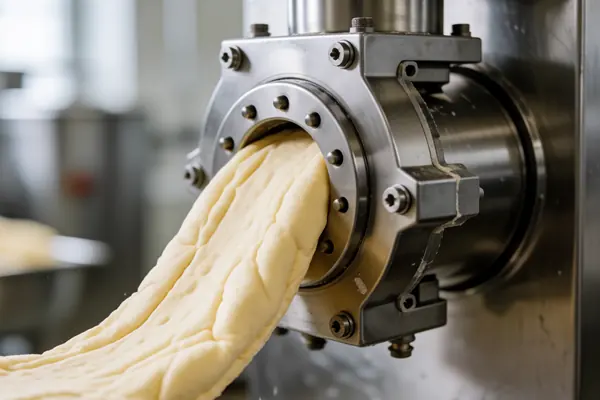
A rotating screw forces the mix along a heated barrel. Friction and pressure of about 10 to 20 bar cook it from the inside, gelatinising the starch.
Follow the dough doodlexstruder
HOW IT IS MADE
Many puffed snacks are cooked inside a screw.
THE FLASH where the puff happens
10–20 bar Pressure that cooks the mix by friction
A cooking extruder mixes, heats and squeezes a damp, starchy dough, then forces it through a shaped hole. As the pressure drops, the water inside turns to steam and the dough puffs into a crisp, airy shape.
THE SHORT ANSWER
Three stages explain most extruded foods.
Each comes from food engineering sources.
THE SCREW
A rotating screw forces the mix along a heated barrel. Friction and pressure of about 10 to 20 bar cook it from the inside, gelatinising the starch.
Follow the doughTHE DIE
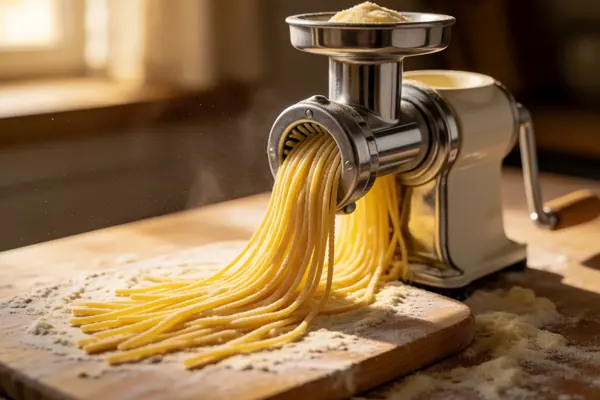
The cooked dough is pushed through a die, a plate with openings in the shape you want, and blades cut it to length as it comes out.
Shapes and productsTHE FLASH
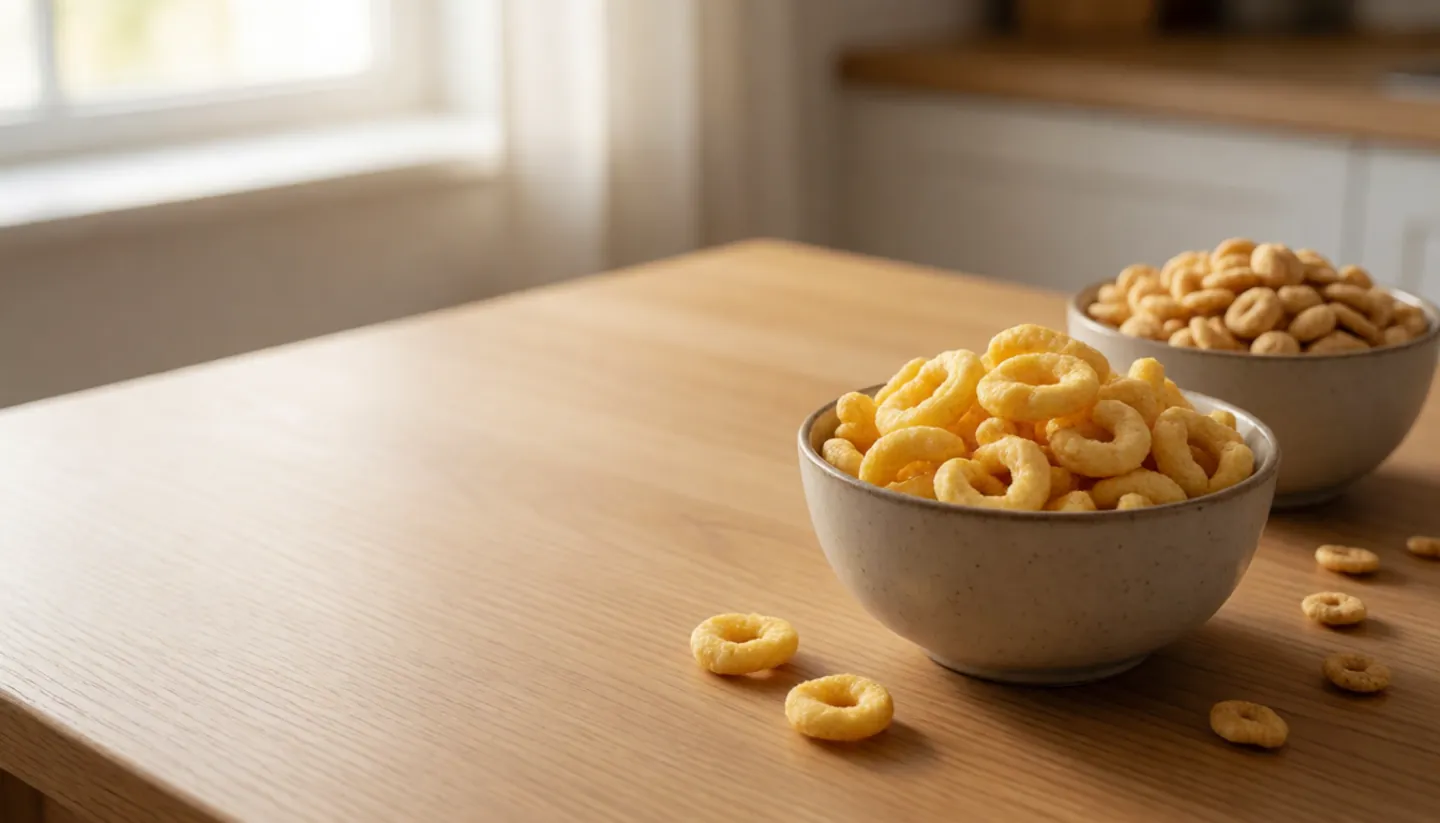
Inside, high pressure keeps the water dissolved. At the die the pressure falls, the water vaporises in a 'flash' and the extrudate expands into a light, airy snack.
See the numbersFOLLOW THE DOUGH
Pick a stage to see what happens to the mix. The bar shows roughly how hot and pressurised it is at that point.
Based on Wikipedia's Food extrusion article, an Oxford University industrial modelling study of cereal extrusion and a Lublin University chapter on extrusion-cooking of starch.
FOUR KINDS OF EXTRUDED FOOD
Most extruded foods are high in starch. How much they puff depends on moisture, temperature and the die.
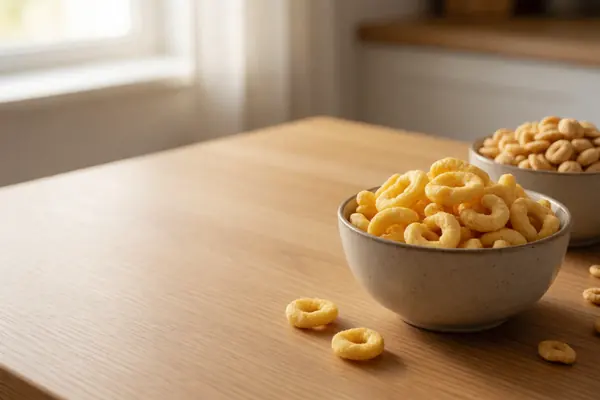
Breakfast cereals and corn curls are made at high temperature and low moisture under high shear, so they puff straight out of the die.
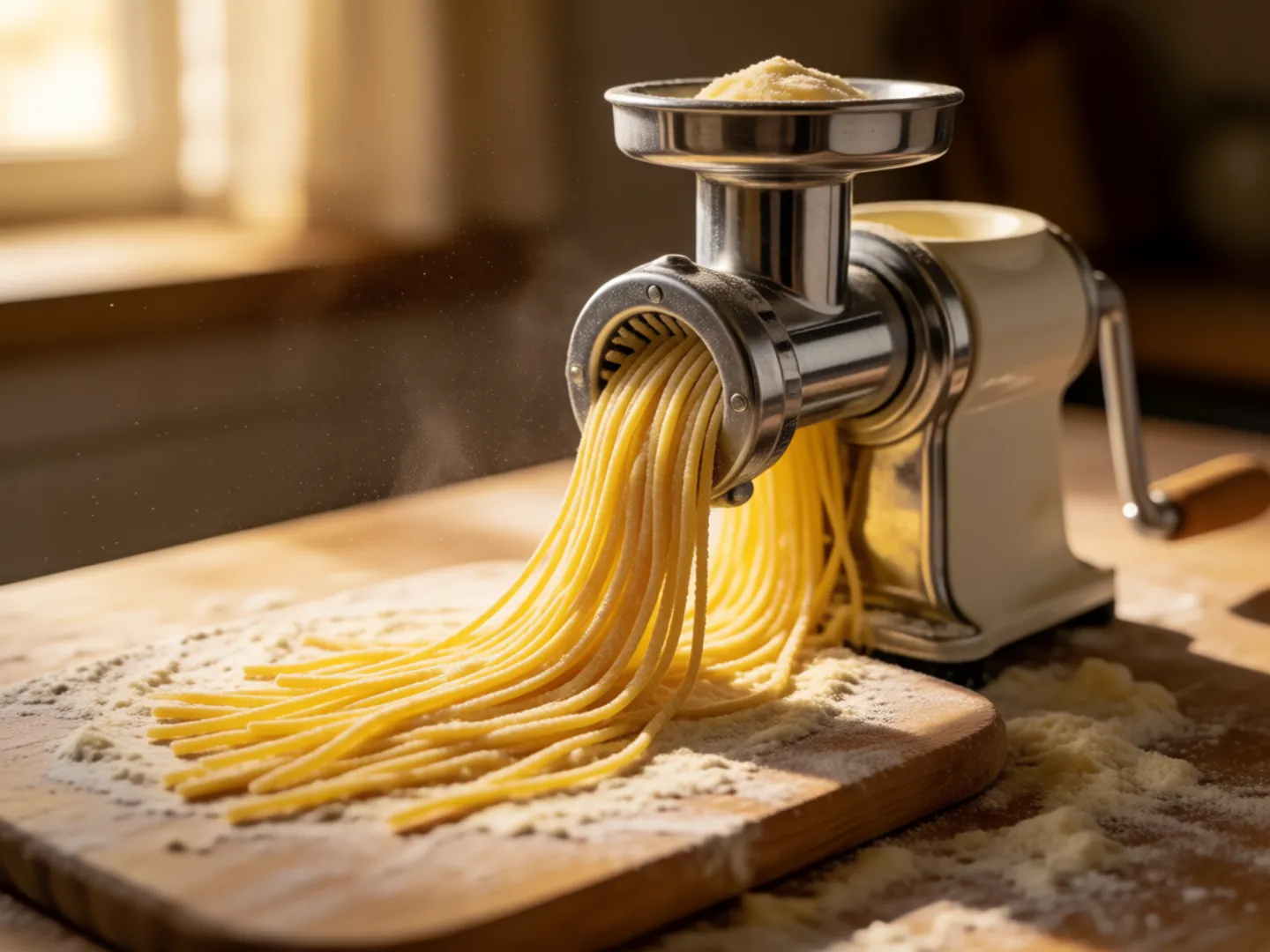
Pasta is extruded at intermediate moisture, about 40%, and low temperature, so it stays dense. Dry pasta has been made this way since the 1930s.
Some extruders make half-products: small pellets that are later fried or hot-air expanded into snacks.
Meat analogues use plant proteins and a long die to give a fibrous, meat-like structure. Pet kibble and fish feed are extruded too.
TWO NUMBERS WORTH KNOWING
One figure on the pressure inside,
one on how hot the barrel can get.
10–20 bar
Pressure that cooks the mix by friction
The product produces its own friction and heat from the pressure in the extruder. Many processes use a high temperature for a short time.
PRESSURE · FOOD EXTRUSION
≈ 200 °C
Peak temperature inside a cereal extruder
Internal heating can reach up to 200 °C. At around 10 bar the water stays dissolved until the mix leaves the die and flashes into vapour.
TEMPERATURE · OXFORD STUDY
Moisture is the most important control: more moisture lowers viscosity, temperature and die pressure, and gives a denser product. Even the amount of salt can change expansion and colour.
A HAPPY ACCIDENT
Cheese puffs were invented independently by two US companies in the 1930s. One account says a worker at a Wisconsin maker of flaked animal feed noticed strings of puffed corn oozing from the flaking machines and developed them into a snack.
Extrusion itself is older. The first food extruder was designed for sausages in the 1870s, and the first extrusion cooking machine, an expanding pelleting machine, dates from 1954. Within a few years it was making extruded food for dogs and fish.
Questions
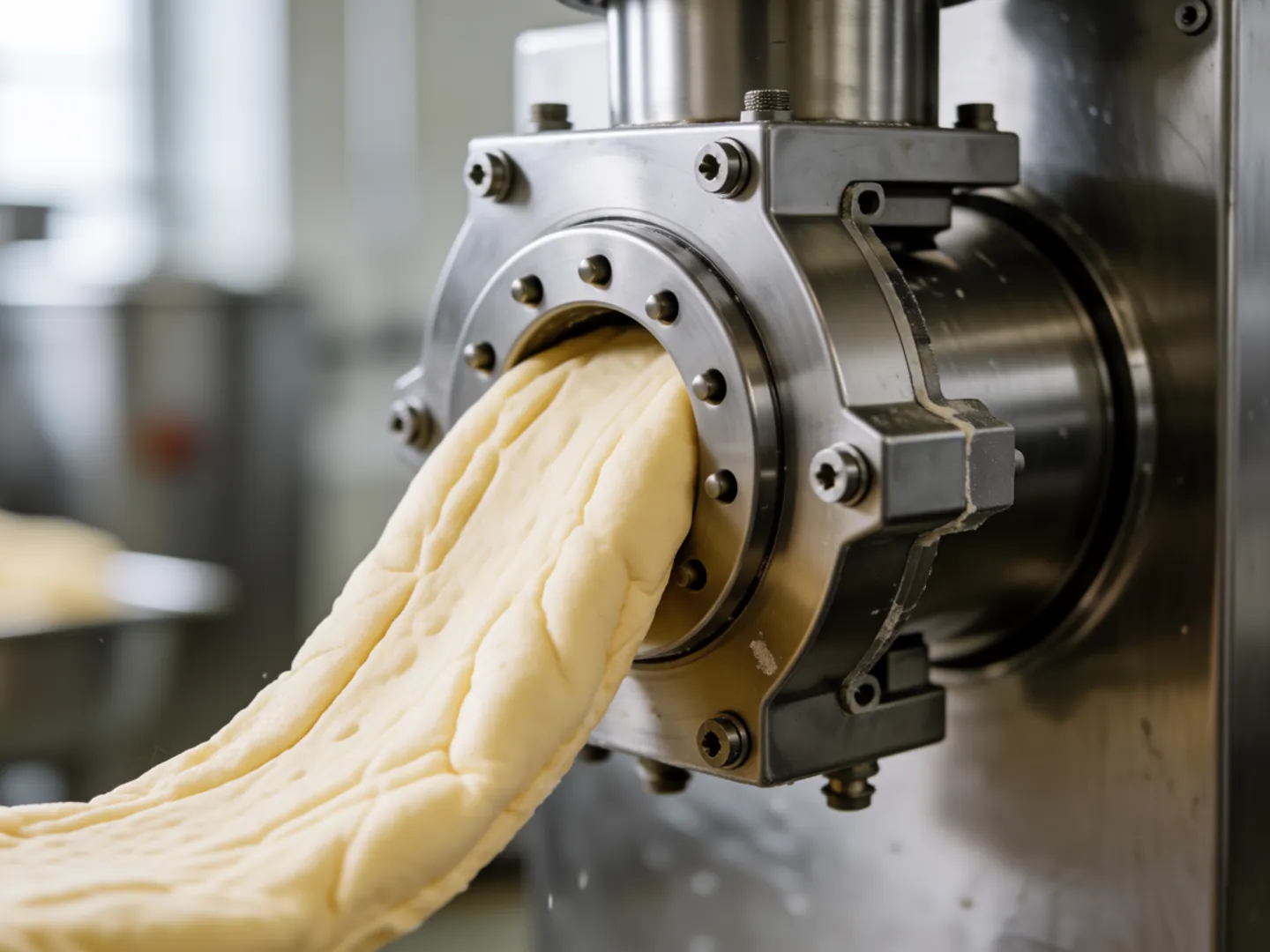
A machine that forces a soft mixed material through an opening in a shaped plate, called a die. A cooking extruder also heats the mix with a rotating screw so it cooks on the way through.
Inside the extruder high pressure keeps the water dissolved. When the mix leaves the die the pressure drops, the water vaporises and bubbles expand the dough. This is called the flash.
Yes. Dry pasta has been made by extrusion since the 1930s, at intermediate moisture of about 40% and low temperature, so it does not puff.
Reference sources describe the effects as ambiguous: extrusion can destroy toxins and some antinutritional factors, but can also change carbohydrates, fibre, protein and vitamins in better or worse ways.
Breakfast cereals, corn curls, snack pellets, meat analogues, pet food and fish feed, as well as non-food products such as aluminium sections and plastic pipe.
Updated
ABOUT THIS NAME
doodlexstruder.com is part of the DoodleSale portfolio. It isn't in an auction right now, but you can ask about leasing it.